

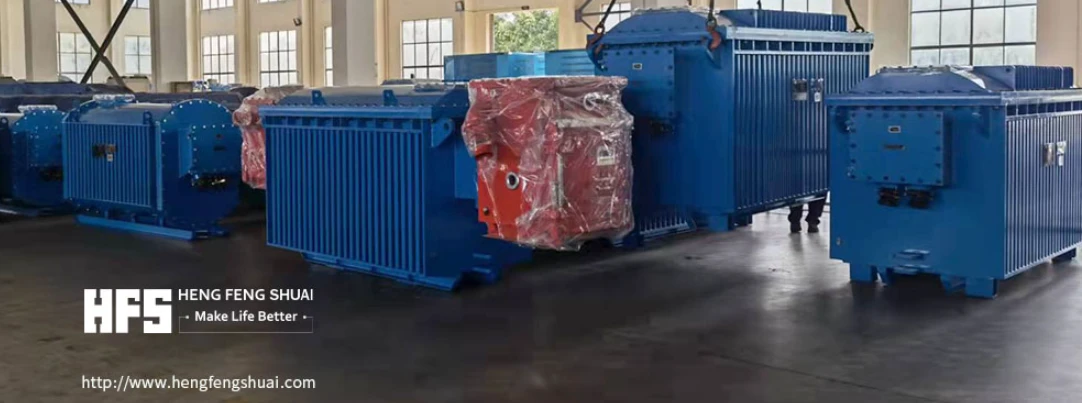
1. Standard Installation Site Requirements & Ventilation Specifications
A qualified installation environment is the foundation for the safe operation of KBSG mining explosion-proof isolation transformers. All installation work must strictly comply with national Coal Mine Safety Regulations, with guaranteed ventilation conditions and standardized installation clearances to avoid potential safety hazards.
1.1 Compliance with Coal Mine Safety Regulations
The installation site must be well-ventilated, free from accumulated flammable gas and coal dust, and meet the explosion-proof safety standards for underground coal mines. It is forbidden to install the transformer in closed, poorly ventilated or high-risk explosive accumulation areas.
1.2 Standard Installation Clearance Dimensions
To ensure daily inspection, operation and maintenance space, the installation clearance of the KBSG explosion-proof isolation transformer must strictly meet the following standards (corrected professional engineering data):
The minimum distance between the protruding parts of the transformer shell and roadway side supports, guardrails and mobile mining equipment is 0.5m;
The net width of the on-site sidewalk and equipment inspection channel shall not be less than 0.8m;
The vertical distance between the top highest point of the transformer and the roadway roof or support lowest point is no less than 0.25m;
Reserve sufficient operating and maintenance space for subsequent equipment debugging and overhaul.
2. Formal Installation Procedures, Methods & Key Precautions
The KBSG mining explosion-proof isolation transformer features flexible installation and simple layout. Follow the standardized installation process and wiring specifications to ensure reliable electrical connection and stable equipment operation.
2.1 Equipment Placement Requirements
This explosion-proof transformer can be directly placed on underground rails or flat solid ground without additional fixed installation. After stable positioning of the equipment, lay out and connect high-voltage cables, low-voltage cables and control cables in sequence according to the on-site power distribution scheme, and connect the cables to matching coal mine mechanical and electrical equipment.
2.2 Professional Wiring Specifications
Cable wiring directly affects the operational safety of the transformer, and the following mandatory standards must be followed:
The front end of all incoming and outgoing cables must be welded with standard wiring terminals to ensure stable connection;
All cable inlets and outlets must be tightly pressed and sealed to meet mine explosion-proof and dust-proof requirements;
All electrical connection points must be in good contact, firmly pressed and fixed without looseness, poor contact or virtual connection phenomena.
3. Core Debugging Steps for KBSG Explosion-Proof Transformer
After the completion of equipment installation, comprehensive functional debugging is required to verify the integrity of electrical performance, interlocking protection and emergency response functions, ensuring the equipment meets underground power supply operation standards.
3.1 High and Low Voltage Switch Operation Test
Manually open and close the high-voltage switch and low-voltage switch of the transformer for 10 consecutive times respectively to check whether the switch operates flexibly, without jamming, failure to close or trip abnormally.
3.2 Simulated Electrical Interlock Protection Test
Carry out simulated opening test of the equipment box upper cover. Verify that the built-in interlocking device can automatically and quickly cut off the incoming high-voltage power supply when the box cover is opened, realizing safety interlock protection and preventing electric shock and explosion accidents.
3.3 Emergency Stop Button Function Test
Trigger the emergency stop button of the transformer manually. The upper-level circuit breaker should act immediately and complete power breaking to ensure the equipment can cut off power rapidly in emergency situations and guarantee mine operation safety.
3.4 Power Supply Sequence Interlock Simulation Test
Simulate normal power-off working conditions to verify the protection sequence: the low-voltage feed switch opens first, followed by the high-voltage load switch. This standardized power-off sequence avoids equipment burnout caused by reverse operation and ensures the rationality of the power supply system logic.
4. Post-Installation Acceptance Test Items & Standards
After completing installation and debugging, conduct full acceptance inspection to eliminate hidden dangers and ensure all indicators meet mine safety operation specifications:
Check the wiring sequence and connection of all high-low voltage cables and control cables to ensure accurate wiring without wrong connection, missing connection or reverse connection;
Inspect the assembly of all equipment parts, fasteners and sealing components to confirm complete assembly and firm installation;
Recheck the explosion-proof performance and sealing performance of all explosion-proof joints to meet underground explosion-proof standards.
5. Pre-Operation Preparation & Trial Operation Specifications
After all acceptance test items are qualified, proceed with standardized trial operation steps:
First, conduct no-load high-voltage power transmission trial operation. During the operation period, continuously monitor the transformer’s operating noise, temperature rise and operating status. Confirm no abnormal noise, overheating, tripping or other faults in no-load operation. After the no-load operation is stable, carry out formal load connection and official power supply operation to support normal production of coal mine mechanized equipment.
6. Standard Operating Conditions of KBSG Mining Explosion-Proof Isolation Transformer
To ensure the service life and stable performance of the transformer, the equipment must be operated within the specified environmental and working condition range:
Altitude: Operating altitude shall not exceed 2000 meters;
Ambient temperature: The maximum ambient working temperature shall not be higher than +40℃;
Air humidity: Relative air humidity shall not exceed 95% (at ambient temperature of +25℃);
Operating stability: No severe jolting and strong vibration during operation; the vertical inclination angle of the equipment shall not exceed 15°;
Environmental medium: The working environment is free of corrosive gas, vapor and harmful substances that damage metal parts and insulation materials;
Site condition: Install and operate in a dry and clean underground environment.
Conclusion
The installation and debugging of the KBSG mining explosion-proof isolation transformer are systematic and standardized technical work. Strict compliance with site selection standards, installation procedures, debugging specifications and operating conditions is the key to ensuring the safe, efficient and long-term operation of the equipment. Standardized operation can effectively reduce underground power supply faults, improve coal mine production efficiency, and provide reliable power guarantee for fully mechanized mining equipment.
Meta Description: Learn the full guide for KBSG mining explosion-proof isolation transformer installation, debugging, acceptance and trial operation. Get standard specifications & applicable conditions for mine flameproof transformers.
Qingdao Hengfengshuai Electric Co., Ltd
WhatsApp: +86 152 6625 8801
Address: No. 251, Xingyang Road, Chengyang District, Qingdao, Shandong
Email: hfs@hengfengshuai.com
Customer service email: service@hengfengshuai.com
website:https://www.hengfengshuai.com