Power Transformer Quality Control and Quality Assurance
Quality Assurance for Power Transformers and Electrical Equipment
Hengfengshuai Electric focuses on power transmission and distribution equipment and related products. It has established workflows covering supplier management, procurement quality, product inspection, quality issue handling, and delivery documentation. Quality management is implemented in accordance with customer technical agreements, applicable standards, and project acceptance requirements.
Quality management goes beyond final product inspection. It also emphasizes early identification of supply chain risks, timely responses to quality deviations, and verification of corrective action effectiveness. These activities provide a basis for customers’ procurement decisions, project acceptance, and subsequent technical support.
I. Management Systems and Certifications
1. ISO Management System Certifications
Hengfengshuai Electric currently holds the following management system certifications:
|
Management System
|
Certification Standard
|
Main Management Focus
|
|
Quality Management System
|
GB/T 19001-2016 / ISO 9001:2015
|
Quality management, supplier and procurement control, and related business processes
|
|
Environmental Management System
|
GB/T 24001-2016 / ISO 14001:2015
|
Environmental management and related business activities
|
|
Occupational Health and Safety Management System
|
GB/T 45001-2020 / ISO 45001:2018
|
Occupational health and safety risks and related management activities
|
Certification body: Lianbiao Certification (Jiangsu) Co., Ltd.
The relevant certificates were issued on August 27, 2026, and are valid through August 26, 2029. Surveillance audits must be completed as required during the validity period, and the applicable certification requirements must continue to be met.
Note: The scope stated in the certificates covers the sale of power transmission and distribution equipment and the related management activities specified therein. Please refer to the original certificates for the exact scope.
2. Supplier Quality Assurance (SQA)
Hengfengshuai Electric has established a Supplier Quality Assurance (SQA) management framework to define responsibilities and procedures for supplier quality management, material nonconformity handling, and supplier improvement.

According to the company’s SQA management documents, the main activities include:
* Supplier quality monitoring: Track supplier quality performance and coordinate the resolution of quality issues across the supply chain.
* On-site investigation of abnormalities: When a material quality issue occurs, verify the situation based on the actual site, item, and conditions, and work with relevant departments to identify causes and clarify responsibility.
* Supplier corrective improvement: Require relevant suppliers to develop immediate response plans and implement follow-up improvement measures.
* Recurrence prevention: Analyze the root causes of nonconformities, establish preventive measures, and investigate similar issues where necessary.
* Verification of corrective actions: Evaluate and verify the effectiveness of improvement measures. If a supplier continues to fail to meet quality requirements, appropriate actions will be taken in accordance with company procedures.
By defining responsibilities, standardizing the handling process for abnormalities, and retaining process records, the company aims to reduce the impact of supply chain quality issues on procurement, production schedules, and project delivery.
II. Supplier and End-to-End Quality Control
1. Supplier Qualification and Periodic Evaluation
Through its supplier management procedures, the company conducts supplier information reviews, preliminary assessments, qualification approval, ongoing monitoring, and periodic evaluations.
Supplier evaluations generally focus on the following areas:
* Supplier background and ability to fulfill supply commitments;
* Technical capability and quality assurance capacity;
* Product quality, delivery performance, quantities supplied, pricing, and service;
* Results of initial delivery inspections and, where necessary, small-batch trial use;
* Quality performance in subsequent deliveries and capacity for continuous improvement.
Suppliers are classified or managed by category according to evaluation results. Suppliers requiring further observation may be reassessed, have purchasing temporarily suspended, or be subject to other management measures. Suppliers with strong evaluation results are managed on an ongoing basis in line with the assessment conclusions.
2. Incoming Inspection and Material Quality Control
Inspection items and requirements for raw materials and purchased components used in transformers, switchgear, and other power transmission and distribution equipment are determined in accordance with product technical documentation, procurement agreements, and applicable inspection specifications.
Key items subject to inspection and control include:
|
Control Item
|
Main Control Requirements
|
|
Conductors and Related Materials
|
Specifications, material type, dimensions, and quality certificates
|
|
Insulating Materials
|
Specifications, insulation class, and related technical requirements
|
|
Transformer Silicon Steel Sheets, Insulating Oil, etc.
|
Material requirements, corresponding quality certificates, and performance indicators
|
|
Switchgear Structural Parts and Electrical Components
|
Model, rated parameters, specifications, and conformity with design requirements
|
|
Outsourced Machined Parts
|
Drawing requirements, dimensions, machining quality, and acceptance requirements
|
If incoming materials are found to be nonconforming, they are identified, handled, and reported in accordance with established procedures to prevent unprocessed or unapproved materials from entering subsequent operations.
3. Production Process and Inspection Control
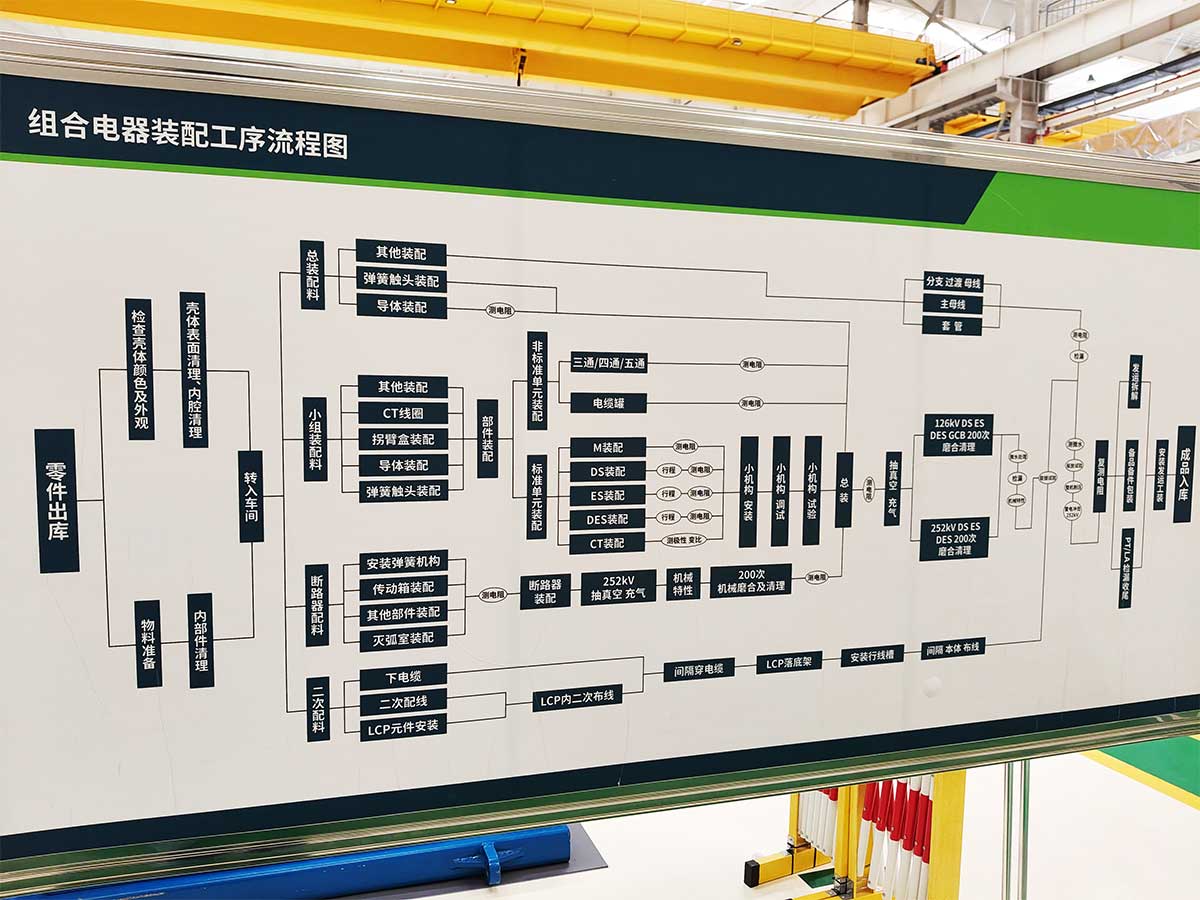
The company’s relevant management documents cover inspection stages such as IQC, IPQC, and FQC. Appropriate quality controls are applied according to the product and the applicable scope:
IQC — Incoming Quality Control
Inspect purchased materials and components according to applicable specifications, verifying their specifications, quality documentation, and relevant inspection requirements.
IPQC — In-Process Quality Control
Follow up promptly and coordinate the handling of material abnormalities and quality issues arising during production, conducting cause analysis and responsibility confirmation as appropriate.
FQC — Final Quality Control
Inspect finished products in accordance with technical requirements and applicable inspection specifications, verify the results of required inspection items, and maintain records.
The inspection items, sampling rules, acceptance criteria, and recordkeeping methods for each stage shall be governed by the relevant inspection documents and project technical requirements.
4. Closed-Loop Management of Quality Issues
For material and quality abnormalities arising during production, the company’s SQA management documents define five main stages of handling:
* Determine responsibility for the abnormality;
* Develop an internal emergency response plan;
* Require the supplier to develop immediate response measures;
* Implement recurrence-prevention measures and investigate other relevant areas where necessary;
* Review and verify the actual effectiveness of improvement measures.
When handling abnormalities, relevant materials, semi-finished products, work in progress, and finished products are managed in accordance with nonconforming product control requirements and traced where necessary. Depending on the issue, suppliers and relevant internal departments may work together on the resolution, with records retained throughout the process.
By integrating issue identification, interim containment, cause investigation, corrective and preventive actions, and effectiveness verification into a single process, the company ensures that quality issues receive ongoing follow-up rather than stopping at detection.
III. Standards, Testing, and Quality Documentation
1. Product Standards and Project Requirements
Hengfengshuai Electric identifies applicable product standards and inspection requirements based on product category, customer technical agreements, target markets, and project specifications.
The principal standards systems that may be referenced include:
* IEC: Standards published by the International Electrotechnical Commission;
* GB / GB/T: Chinese national standards;
* EN: European standards;
* GOST: GOST standards adopted in certain countries and regions;
* NF: Relevant French standards;
* ANSI / IEEE: Relevant American National Standards and standards of the Institute of Electrical and Electronics Engineers.
Depending on product configuration and project requirements, power transformers may reference the IEC 60076 series and applicable GB/T 1094 series standards; high-voltage switchgear may reference the IEC 62271 series according to equipment type; and low-voltage switchgear assemblies may, where applicable, reference the IEC 61439 series and relevant national standards.
The applicable editions, clauses, and specific test items shall be determined by the project technical agreement and the standards applicable to the project.
2. Factory Inspection and Performance Verification
Before equipment leaves the factory or is delivered, the required inspections and tests shall be defined in consideration of the product category, technical documentation, contractual terms, and applicable standards.
3. Quality Records and Document Management
The company’s supplier management and SQA documents specify the main records to be created and retained, including:
* Supplier investigation, qualification, and periodic evaluation records;
* Approved supplier list;
* Procurement process and related quality records;
* Incoming material nonconformity handling records;
* Records of corrective and preventive actions;
* Supplier improvement records and verification of effectiveness.
For specific projects, product technical documentation, applicable inspection or test reports, quality certificates, and certification documents may be provided in accordance with contractual terms and customer acceptance requirements. The exact types and scope of documents supplied shall be determined by the project agreement.
Hengfengshuai Electric — Supporting Power Transmission and Distribution Project Delivery Through Standardized Quality Management
From supplier screening and evaluation to incoming quality control, issue resolution, and inspection record filing, Hengfengshuai Electric continues to refine its management processes and apply quality controls in line with product characteristics and project requirements. These efforts provide a reference for customer procurement evaluation, project acceptance, and subsequent technical support.