

I. Project Overview | 40MVA‑220kV/35KV Mobile Substation on‑Vehicle Adapted for Uzbekistan Power Grid
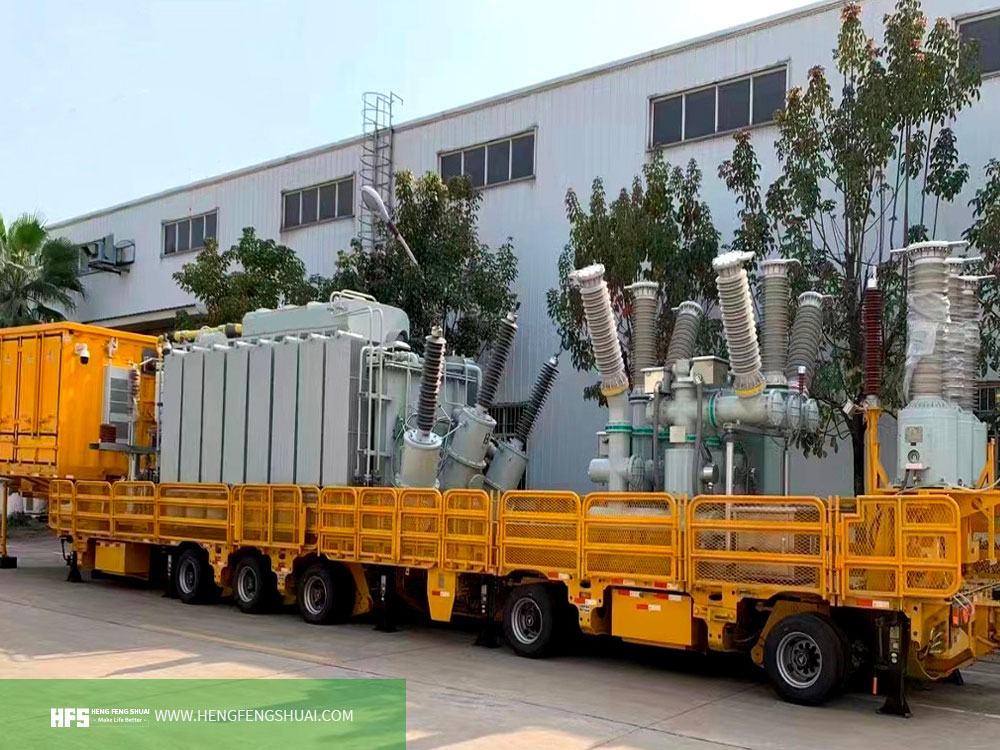
This complete on‑vehicle mobile substation integrates a 40MVA‑220kV/35KV oil‑immersed power main transformer, a 220 kV HGIS high‑voltage switch module, a 35 kV medium‑voltage distribution module, an integrated protection & automation system, and a semi‑trailer transport chassis. Custom‑built for Uzbekistan power grid emergency repair & restoration, renovation & expansion of aging substations, temporary grid‑connection of wind‑solar new‑energy facilities, and temporary power supply for mining areas, it delivers one‑stop solutions for six core power‑supply pain points in Central Asia: huge diurnal temperature variations under continental climate, sand‑dust storm intrusion, grid voltage fluctuation, emergency replacement of ageing equipment, rapid deployment & commissioning, and GOST‑UZ local compliance.
Hengfengshuai Electrical boasts years of experience in exporting and delivering high‑voltage power complete‑set equipment to Central Asia. The full‑set equipment complies with Uzbekistan GOST‑UZ national standards, GOST IEC series standards and IEC 60076 international specifications. Optimized for the local 50 Hz public power grid of Uzbekistan, it features 220 kV high‑voltage incoming access and 35 kV medium‑voltage distribution output. It is applicable to rapid power‑grid emergency repair, replacement of in‑service substations under maintenance, temporary step‑up for desert photovoltaic & wind‑power projects, and temporary power supply for industrial‑mining loads. It can output stable and reliable electric power rapidly, offsetting the shortcomings of ageing grid equipment and insufficient emergency power‑supply capacity in partial regions of Uzbekistan.
1. Six Core Pain Points for 40MVA‑220kV Mobile Substation on‑Vehicle in Uzbekistan
a. Extreme continental climate with large temperature swings: Ambient temperature range of ‑30 ℃ ~ +50 ℃ (design benchmark per GOST 15150). Continuous high temperature in desert summers and extreme cold in winters may cause excessive winding temperature rise of conventional transformers, brittle fracture of sealing rubber at low temperatures, accelerated ageing of insulating materials and insufficient heat‑dissipation efficiency. b. Desert sand‑dust storm intrusion: Frequent sand‑dust storms in gobi‑desert regions. Fine sand penetrates into equipment, clogs radiators and deposits on insulator surfaces, likely resulting in heat‑dissipation failure and external‑insulation flashover faults. Conventional outdoor equipment has inadequate protection ratings. c. Severe grid‑voltage fluctuation: Parts of the 220 kV main‑grid equipment in Uzbekistan are ageing. Coupled with large‑scale grid‑connection of wind‑solar new‑energy sources, the system undergoes wide voltage deviation. Off‑circuit tap‑changing cannot adapt to dynamic load variations, giving rise to high risks of out‑of‑tolerance terminal‑voltage levels. d. Strict requirements for emergency commissioning: Traditional fixed substations require long civil‑construction cycles. In case of equipment failures or line tripping, power supply needs to be restored quickly. Conventional equipment involves lengthy on‑site installation and commissioning cycles and fails to meet emergency‑repair timelines. e. Prominent harmonic interference from new‑energy sources: Large‑scale centralized grid‑connection of domestic photovoltaic and wind‑power plants introduces high‑grid‑harmonic content, which may cause mal‑operation of relay‑protection, measurement & control devices and endanger safe and stable grid operation. f. High local‑certification compliance thresholds: Uzbekistan enforces mandatory GOST‑UZ technical specifications. Technical documents and operation interfaces must support Russian / Uzbek languages. Its insulation, loss and safety specifications differ from IEC standards. Non‑compliant documents will result in rejection of grid‑connection acceptance.
2. Summary of Core Technical Parameters for 40MVA‑220kV/35KV Mobile Substation on‑Vehicle
|
Parameter Item |
40MVA‑220kV/35KV Mobile Substation on‑Vehicle |
Project Adaptation Notes for Uzbekistan |
|---|---|---|
|
Rated Capacity |
40 MVA |
Complete on‑vehicle integrated unit. A single set can undertake main regional emergency loads, satisfying requirements for substation maintenance replacement and temporary grid‑connection of new‑energy facilities. |
|
Rated Frequency |
50 Hz |
Unified national grid frequency of Uzbekistan. Transformers, HGIS switches, cooling fans, oil pumps and protection devices are all electromagnetically designed for 50 Hz to avoid overheating and excessive noise caused by modification. |
|
Rated Voltage Ratio |
220 / 35 kV |
Matches Uzbekistan’s standard voltage levels for 220 kV main‑line power transmission and 35 kV regional power distribution. |
|
Equipment Type |
On‑vehicle semi‑trailer integrated configuration, consisting of oil‑immersed power transformer + HGIS high‑voltage combined electrical apparatus + integrated automation module |
Prefabricated and integrated in factory, with reinforced vibration‑resistance for the whole unit. Suitable for long‑distance highway transportation and ready for rapid on‑site positioning and commissioning. |
|
Voltage Regulation Mode |
On‑load tap‑changer (OLTC) on high‑voltage side; tap‑regulation range ±8 × 1.25 %, 17 tap positions |
Continuous on‑load voltage regulation to accommodate wide‑range grid‑voltage fluctuations in Uzbekistan and realize output‑voltage adjustment without power outage. |
|
Cooling Mode |
ONAN / ONAF: Oil Natural Air Natural / Oil Natural Air Forced |
Optimized heat dissipation under extreme high‑temperature conditions of +50 ℃. Temperature‑control logic automatically starts cooling fans to compensate for heat‑dissipation degradation in desert high‑temperature environments. |
|
Vector Group |
YNd11 |
Compliant with GOST‑UZ and IEC standards. Suppresses harmonics from photovoltaic & wind‑power generation and ensures stable operation of relay‑protection and metering devices. |
|
Design Ambient Temperature |
Maximum ambient temperature +50 ℃, minimum ‑30 ℃ (climate category per GOST 15150) |
Windings, seals and insulators are optimized via wide‑temperature‑range simulation to cope with both high‑temperature summers and extreme‑cold winters. |
|
Winding Material |
High‑purity electrolytic copper winding with enhanced anti‑harmonic capability (K ≥ 4) |
Low loss and high thermal conductivity. Adaptable to harmonic‑polluted new‑energy grids. Temperature rise remains controllable under alternating high‑low‑temperature operating conditions, extending insulation service life. |
|
Insulation Level (GOST‑UZ) |
HV 220 kV: BIL 950 kV, SIL 850 kV, power‑frequency withstand voltage 395 kV / 1 min; MV 35 kV: BIL 325 kV, power‑frequency withstand voltage 140 kV / 1 min |
Meets withstand‑voltage requirements for lightning and switching over‑voltages in Central Asia. |
|
Short‑circuit Impedance |
HV‑MV: 13.0 % (tolerance ±7.5 %) |
General‑purpose impedance for Uzbekistan’s 220 kV power grid. Balances system stability and short‑circuit‑current limiting and satisfies GOST dynamic‑thermal‑stability requirements. |
|
Loss Standard (GOST R 52735, 50 Hz @ 75 ℃) |
No‑load loss P₀ ≤ 42 kW; load loss Pk ≤ 245 kW; no‑load current ≤ 0.4 % In |
Factory FAT and on‑site SAT tests are retested in accordance with GOST standards. Non‑compliant parameters will result in refusal of grid‑connection acceptance by power utilities. |
|
Noise Level |
≤ 73 dB(A) (1.5 m from enclosure under full load) |
Complies with environmental‑protection noise‑control requirements for suburban substations in Uzbekistan. |
|
Protection & Anti‑corrosion Grade |
Whole‑module IP65 rating; low‑temperature anti‑corrosion steel for equipment enclosures; sand‑dust‑resistant sealed structures; C4 anti‑corrosion coating |
Resists gobi sand‑dust storms and condensation induced by diurnal temperature swings. Passes 720‑hour salt‑spray and sand‑dust‑ageing simulation tests; seals do not crack under low‑temperature winter conditions. |
|
Applicable Standards |
Full set of GOST‑UZ specifications, GOST IEC 62271, GOST R 52735, IEC 60076; partial ANSI‑standard compatibility |
Full Russian‑English bilingual type‑test and factory‑test reports. Satisfies grid‑connection review by Uzbekistan national power grid and Uzstandard compliance verification. |
|
Transport Conditions for On‑Vehicle Equipment |
Tri‑axle low‑plate semi‑trailer, complete set of shock‑absorbing & buffering structures; flexible soft connections between equipment modules; compliant with Central‑Asia highway‑gauge transportation requirements |
Flexible connections between equipment modules protect electrical equipment from damage during bumpy transportation. Commissioning for power transmission can be initiated within 3 hours after on‑site positioning. |
II. Why Choose Hengfengshuai Electrical Custom‑Built 40MVA‑220kV/35KV Mobile Substation on‑Vehicle Solution for Uzbekistan
1. Factory‑prefabricated Whole‑Vehicle Integration: Greatly Shortens Project Commissioning Cycle and Reduces Emergency Power‑supply Costs
Traditional emergency solutions require separate procurement of transformers, high‑voltage switches and protection cabinets, accompanied by massive on‑site civil‑construction, wiring and commissioning work, with cycles stretching for months. All modules of this on‑vehicle mobile substation are pre‑assembled, wired and fully factory‑commissioned in‑house:
• The whole set is pre‑mounted on a low‑plate semi‑trailer. Large‑scale on‑site civil‑construction is unnecessary; only site‑levelling is required. Power‑transmission‑ready commissioning can commence after rapid on‑site wiring. Under emergency‑repair scenarios, power‑supply conditions can be achieved within 3 hours.
• Transformers, HGIS switches, protection‑measurement‑control units, DC power supplies and cooling systems are fully integrated as a complete set, with unified spare‑part models, reducing spare‑part‑inventory pressure.
• Quality risks stemming from inconsistent on‑site‑installation workmanship are avoided. The equipment is shipped only after completion of full‑scope factory FAT tests.
• Complete sets of Russian‑language technical documents are supplied to complete GOST‑UZ document review in one go and lower barriers for local grid‑connection filing.
2. OLTC On‑load Voltage Regulation + YNd11 Vector Group + K‑factor Windings: Adapted to Uzbekistan Power Grid and New‑energy Grid‑connection
Uzbekistan is vigorously developing photovoltaic and wind‑power generation, featuring large diurnal‑output fluctuations and frequent 220 kV grid‑voltage swings. Off‑circuit tap‑changing requires power outages and cannot sustain continuous power supply:
a. OLTC on‑load tap‑changer with ±10 % regulation range and 17 fine‑adjustment positions delivers uninterrupted continuous voltage stabilization, keeping 35 kV medium‑voltage output‑voltage offset within ±3 %.
b. YNd11 vector group combined with K ≥ 4 anti‑harmonic windings effectively suppress harmonic distortion from photovoltaic inverters and wind‑power converters, preventing mal‑operation of relay‑protection and metering devices.
c. 13.0 % standard short‑circuit impedance matches short‑circuit‑current limits of Uzbekistan’s 220 kV system and satisfies GOST‑standard 2‑second short‑circuit dynamic‑thermal stability, safeguarding equipment safety under fault conditions.
3. 50‑Hz‑specific Electromagnetic Design + ONAN/ONAF Composite Cooling + Wide‑temperature‑range Materials: Solves Extreme‑temperature Challenges of ‑30 ℃ ~ +50 ℃
Desert regions in Uzbekistan suffer scorching summers and frigid winters. Conventional equipment tends to trip due to overheating in high‑temperature conditions and experience sealing‑material brittle‑failure under low‑temperature conditions:
a. Whole‑unit 50‑Hz‑specific electromagnetic simulation design precisely controls core magnetic density. All cooling fans, oil pumps and auxiliary motors adopt 50‑Hz specifications to eliminate overheating‑ and noise‑related defects caused by modification.
b. High‑purity electrolytic‑copper windings effectively reduce winding hot‑spot temperatures under equivalent loads. Temperature rise is strictly verified against GOST 15150 standards: top‑oil‑temperature rise ≤ 50 K, average‑winding‑temperature rise ≤ 60 K.
c. ONAN/ONAF dual‑mode cooling system with 18 % enlarged heat‑dissipation area. Temperature controllers monitor oil temperature in real time and activate forced‑air cooling automatically under high‑temperature conditions to offset heat‑dissipation degradation in desert environments.
d. A‑H‑grade low‑temperature‑resistant insulating materials and low‑temperature‑resistant fluoro‑rubber seals are adopted to eliminate hardening‑and‑cracking risks of rubber components in cold winters. GOST‑standard mineral insulating oil is deployed, resisting sludge formation under wide‑temperature‑range operation.
e. Widened oil ducts and enhanced insulation margins enable long‑term continuous operation under +50 ℃ high‑temperature and ‑30 ℃ extreme‑cold ambient conditions.
4. IP65 Fully‑sealed Sand‑dust‑resistant C4‑anti‑corrosion On‑vehicle Structure: Resists Gobi Sand‑dust Storms and Corrosion from Diurnal‑temperature‑cycle‑induced Condensation
Large gobi‑desert territories across Uzbekistan are prone to sand‑dust storms. Severe diurnal‑temperature swings readily trigger condensation. Sand‑dust ingress may cause insulator flashover, radiator clogging and cabinet corrosion:
a. Cabinets and radiators are manufactured from low‑temperature‑resistant anti‑corrosion steel plates, treated via sandblasting, epoxy‑zinc‑rich primer and weather‑resistant polyurethane topcoat for C4 anti‑corrosion performance. The hardware has passed 720‑hour salt‑spray and sand‑dust‑ageing simulation tests.
b. Whole‑unit IP65 sealing protection. Flanges and bushing bases are fitted with multi‑layer low‑temperature‑resistant fluoro‑rubber seals to block ingress of sand‑dust and condensed moisture.
c. Transformers are equipped with diaphragm‑type oil conservators and large‑capacity moisture‑proof breathers to isolate sand‑dust and moisture and reduce on‑site oil‑filtering maintenance frequency. High‑voltage bushings feature enlarged external‑insulation creepage distances to adapt to sand‑dust‑polluted environments.
d. Multi‑stage shock‑absorbing buffer bases are installed between the complete on‑vehicle electrical assembly and the trailer chassis. Flexible soft connections are deployed between all equipment units to absorb bumping shocks during long‑distance highway transportation and prevent damage to internal equipment components.
5. Complete GOST‑UZ Standard‑system Compliance with Russian‑language Operation Interfaces: Satisfies Grid‑connection Regulatory Requirements in Uzbekistan
Insulation, lightning‑impulse withstand‑voltage and loss tests for the full‑set equipment follow GOST‑UZ national standards while complying with IEC 60076 international standards, meeting grid‑connection‑review requirements from Uzbekistan’s Uzstandard and national power‑grid authorities:
a. 220 kV high‑voltage bushings and winding insulation are customized for local lightning‑impulse levels to withstand frequent lightning over‑voltages across Central Asia.
b. Multiple sets of grounding terminals are provided on‑board, with supporting grounding‑design schemes complying with local electrical‑safety codes.
c. Gas relays, pressure‑release valves, optical‑fiber‑based winding‑temperature sensors, PT100 oil‑temperature sensors, HGIS switches and protection‑measurement‑control devices are all 50‑Hz‑compatible. Human‑machine interfaces support Russian‑language operation.
d. Factory FAT and type‑test reports are issued in bilingual Russian‑English format, directly submittable to Uzbekistan national power‑grid and supervision‑authority bodies for grid‑connection review.
III. Benchmark Reference Cases of Deployed Mobile / Fixed‑type 220 kV Substations in Central Asia
Case 1: 220 kV Emergency Mobile‑substation Project in Southern Kazakhstan One set of 55MVA‑220/35 kV on‑vehicle mobile substation was deployed for gobi‑desert‑site conditions with ambient temperatures ranging from ‑28 ℃ to +48 ℃ and frequent sand‑dust storms, serving as emergency replacement for failed main transformers of ageing substations. Post‑commissioning outcomes:
a. Continuous full‑load operation under extreme high‑temperature and extreme‑cold conditions with no overheating or sealing‑leakage failures.
b. OLTC on‑load voltage‑regulation stably controlled 35 kV bus‑voltage within ±2.8 % fluctuation range.
c. IP65 sand‑dust‑resistant sealed structure eliminated external‑insulation flashover during sand‑dust seasons, greatly reducing equipment operation‑and‑maintenance frequency.
Case 2: Photovoltaic‑support Temporary Step‑up Mobile‑substation Project in Kyrgyzstan Mobile substation for temporary grid‑connection of desert photovoltaic power plants under prominent harmonic‑interference conditions. YNd11 configuration combined with K‑factor enhanced windings was adopted. The complete on‑vehicle unit completed power‑transmission commissioning within 4 hours after on‑site positioning. It maintained 7 × 24‑hour full‑year operation without protection mal‑operation or sand‑dust‑intrusion faults and became a demonstration project for new‑energy temporary grid‑connection across Central Asia.
Case 3: 110 kV Mobile‑repair Substation Project in Bukhara Region, Uzbekistan Deployed for equipment‑maintenance replacement within urban power grids under stringent noise, low‑temperature and sand‑dust‑operating conditions adjacent to residential‑building zones. The equipment achieved rapid on‑site deployment without civil‑construction work and passed one‑time GOST‑UZ document verification for local‑market access, successfully completing emergency power‑guarantee tasks.
IV. Custom‑built R&D and Factory FAT Inspection for Uzbekistan 40MVA‑220kV/35KV Mobile Substation on‑Vehicle
1. Specialized Custom‑built R&D Workflow
Technical teams conduct multi‑round electromagnetic, thermal, vibration and over‑voltage simulations targeting Uzbekistan‑specific operating conditions: ‑30 ℃ ~ +50 ℃ wide‑temperature‑range environment, gobi sand‑dust exposure, 50‑Hz grid‑frequency and GOST‑UZ‑standard compliance:
a. 50‑Hz‑specific core electromagnetic optimization, calculating temperature‑rise margins under +50 ℃ high‑temperature and ‑30 ℃ low‑temperature conditions.
b. Increased external‑insulation creepage distances for bushings; selection of low‑temperature‑resistant and sand‑dust‑resistant insulation and sealing materials.
c. 13.0 % short‑circuit‑impedance matching for Uzbekistan’s 220 kV power grid; OLTC on‑load‑tap‑changer circuit design.
d. Simulation analysis of on‑vehicle‑chassis load‑bearing capacity and transport‑induced vibration. Production commences only after anti‑corrosion‑protection and transport‑gauge schemes are validated.
2. Full‑scope Factory FAT Inspections (Bilingual Russian‑English test reports, implemented against GOST‑UZ and IEC standards)
Each complete on‑vehicle mobile substation undergoes routine tests complying with dual GOST‑IEC standards. Special‑condition tests simulate local Uzbek‑operating‑site conditions. Units failing inspection are prohibited from shipment:
a. Basic routine tests: transformer DC resistance, ratio‑vector‑group tests, 50‑Hz no‑load‑loss & load‑loss measurements, short‑circuit‑impedance testing; complete‑set HGIS‑switch tests; power‑frequency withstand‑voltage, lightning‑impulse BIL and switching‑impulse SIL tests; full‑travel‑range verification for OLTC tap‑changers; full‑set validation for protection‑measurement‑control and DC‑power‑supply systems.
b. Wide‑temperature‑range simulation tests: +50 ℃ high‑temperature temperature‑rise simulation validation; ‑30 ℃ low‑temperature‑sealing‑performance verification; 24‑hour continuous full‑load temperature‑rise monitoring.
c. Environmental‑durability special‑tests: 720‑hour salt‑spray ageing, sand‑dust‑simulation testing and IP65 dust‑and‑water‑ingress‑protection verification.
d. Safety dynamic‑thermal‑stability testing: transformer 2‑second sudden‑short‑circuit dynamic‑thermal‑shock test.
e. On‑vehicle‑transport simulated‑vibration test: simulates bumpy‑road‑transport conditions across Central Asia to verify equipment anti‑shock and anti‑vibration performance.
f. Complete‑unit linkage‑testing: fan‑oil‑pump linkage, Russian‑language temperature‑control‑protection logic, gas‑relay tripping, overtemperature protection and HGIS interlock‑function full‑scope verification.
V. SAT Delivery and Localized Operation‑and‑Maintenance Services for Uzbekistan 40MVA‑220kV/35KV Mobile Substation on‑Vehicle
1. Cross‑border Sea‑land Combined‑transport Delivery Scheme (Direct Delivery to Uzbekistan Project Sites)
Key electrical components are protected via nitrogen‑sealed anti‑rust packaging. Transformers, HGIS modules and cabinets are individually moisture‑proof‑packaged. Semi‑trailers and electrical equipment can be split for containerized shipment. Goods reach Uzbekistan via China‑Europe Railway Express or ocean‑shipping plus inland land‑transport. Full‑set GOST‑UZ technical documents, Russian‑language drawings and test reports are prepared in advance for customs clearance. Full‑process temperature‑humidity loggers monitor moisture‑proof and high‑temperature‑protection conditions for equipment. Standard production cycle for the full‑set equipment is 90 days; cross‑border logistics takes 45‑60 days. Overall lead‑time to project‑site arrival is 135‑150 days. Expedited production scheduling is available for emergency‑repair project timelines.
2. Standardized On‑site SAT Installation and Commissioning
a. Tri‑party joint unpacking‑acceptance: Owners, local Uzbek‑power‑grid supervisors and our Central‑Asia‑stationed engineers jointly verify appearance and sealing integrity of transformers, HGIS switches, protection cabinets and on‑vehicle chassis. b. On‑site sealing‑and‑grounding reinforcement: Low‑temperature‑resistant sealing assemblies are replaced; full‑station grounding systems are completed to satisfy local Uzbek‑electrical‑safety‑specification requirements. c. On‑site electrical retesting: Insulation‑resistance, transformer‑ratio and tap‑changer‑action verification, protection‑logic validation. Russian‑language on‑site‑test records recognized by Uzbekistan national power grid are issued. d. No‑load trial operation, graded load‑switching into the 220 kV power grid, and completion of power‑transmission commissioning for the whole mobile substation.
3. Localized Operation‑and‑Maintenance Support for Uzbekistan
a. Supply of complete bilingual Russian‑English drawings, FAT factory‑test reports, GOST‑UZ qualification documents, operation‑and‑maintenance manuals and wide‑temperature‑range‑condition operating‑procedures. b. Hands‑on offline practical‑training: Inspection and maintenance under high‑temperature and extreme‑cold conditions, OLTC tap‑changer maintenance, transformer‑oil‑sample DGA testing, protection‑fault troubleshooting and on‑vehicle‑transport safety precautions. c. Local spare‑parts warehouses in Central‑Asia store commonly‑used spare‑parts including OLTC switches, cooling fans, oil pumps, sealing components and protection‑module assemblies. Rapid delivery to project‑sites across Uzbekistan minimizes equipment‑downtime duration. d. 24‑month full‑unit warranty with lifelong remote‑technical support. Resident high‑voltage‑electrical engineers stationed in Central‑Asia provide on‑site inspection tours and emergency‑repair services.
VI. FAQ for Uzbekistan 40MVA‑220kV/35KV Mobile Substation on‑Vehicle
Q1: Can the whole unit operate stably for long durations under ‑30 ℃ ~ +50 ℃ ambient‑temperatures, sand‑dust‑exposed gobi‑desert environments and bumpy‑transport conditions? A: This product features 50‑Hz‑specific electromagnetic design, ONAN/ONAF composite cooling and low‑temperature‑resistant sealing‑and‑insulation‑material selection. The whole‑unit adopts IP65 sand‑dust‑resistant sealing. Multi‑stage on‑vehicle shock‑absorbing structures are fitted, and transport‑simulation‑vibration tests are completed at factory. It can run stably at full‑load for long durations under extreme‑operating‑conditions. Multi‑level oil‑temperature and optical‑fiber‑based winding‑temperature‑monitoring systems are configured, implementing graded alarm and tripping‑protection functions to avoid shutdown risks.
Q2: Does the full‑set equipment satisfy GOST‑UZ grid‑connection‑acceptance requirements for Uzbekistan? A: Full‑set type‑tests and factory‑inspections strictly follow GOST‑UZ and GOST‑IEC series standards while complying with IEC 60076. Complete bilingual Russian‑English documentation is provided. Insulation, loss and safety‑grounding performances all conform to local specifications. The deliverables can be directly applied for power‑grid tendering, grid‑connection filing and on‑site‑acceptance by supervision authorities.
Q3: What is the overall delivery cycle for the full‑set on‑vehicle mobile substation? Can expedited delivery be arranged for emergency‑repair‑project scenarios? A: Custom‑factory‑production takes 90 days and cross‑border logistics takes 45‑60 days. Expedited‑production scheduling is available for emergency‑repair‑project requirements to shorten overall delivery lead‑times.
Q4: Is the equipment compatible with temporary grid‑connection of Uzbekistan photovoltaic and wind‑power new‑energy facilities? A: YNd11 vector‑group configuration paired with K ≥ 4 anti‑harmonic windings delivers excellent harmonic‑suppression capability. OLTC wide‑range on‑load‑voltage‑regulation adapts to diurnal‑output fluctuations of wind‑solar power generation. 13.0 % short‑circuit‑impedance matches Uzbekistan’s 220 kV new‑energy‑grid‑connection system. Multiple comparable complete‑set units have been operating stably in new‑energy‑projects across Central Asia.
VII. Solution Summary and Cooperation Inquiry for Uzbekistan 40MVA‑220kV/35KV Mobile Substation on‑Vehicle
This complete‑set 40MVA‑220kV/35KV mobile substation on‑vehicle solution fully covers application scenarios including Uzbekistan power‑grid emergency repair, replacement of ageing substations under maintenance, temporary grid‑connection of desert wind‑solar new‑energy facilities and temporary power supply for industrial‑mining sites. Supported by five core custom‑designed features: 50‑Hz‑specific electromagnetic‑simulation design, OLTC uninterruptible‑voltage‑regulation, ‑30 ℃ ~ +50 ℃ wide‑temperature‑range enhanced‑heat‑dissipation, IP65 sand‑dust‑resistant on‑vehicle shock‑absorbing structures and full‑scope GOST‑UZ compliance‑system support, it delivers one‑stop solutions for six key‑industry pain‑points in Central Asia: extreme‑temperature‑range climate, sand‑dust‑storm intrusion, grid‑voltage fluctuation, new‑energy‑source‑induced harmonic interference, urgent‑emergency‑deployment requirements and local‑grid‑connection regulatory compliance.
Hengfengshuai Electrical (hfs@hengfengshuai.com) is well‑versed in complete‑set high‑voltage‑power‑equipment grid‑connection specifications of Uzbekistan GOST‑UZ and Uzstandard authorities. We can provide custom‑built 110 kV‑220 kV full‑capacity on‑vehicle mobile substations and fixed‑type oil‑immersed transformers for new‑construction, capacity‑expansion and emergency‑repair EPC‑projects across Central‑Asian countries. Uzbek local‑power‑groups, international‑engineering‑EPC‑contractors and foreign‑trade suppliers are welcome to request detailed technical quotations, full‑set Russian‑language qualification documents and GOST‑UZ type‑test reports.
Qingdao Hengfengshuai Electric Co., Ltd
WhatsApp: +86 152 6625 8801
Address: No. 251, Xingyang Road, Chengyang District, Qingdao, Shandong
Email: hfs@hengfengshuai.com
Customer service email: service@hengfengshuai.com
website:https://www.hengfengshuai.com