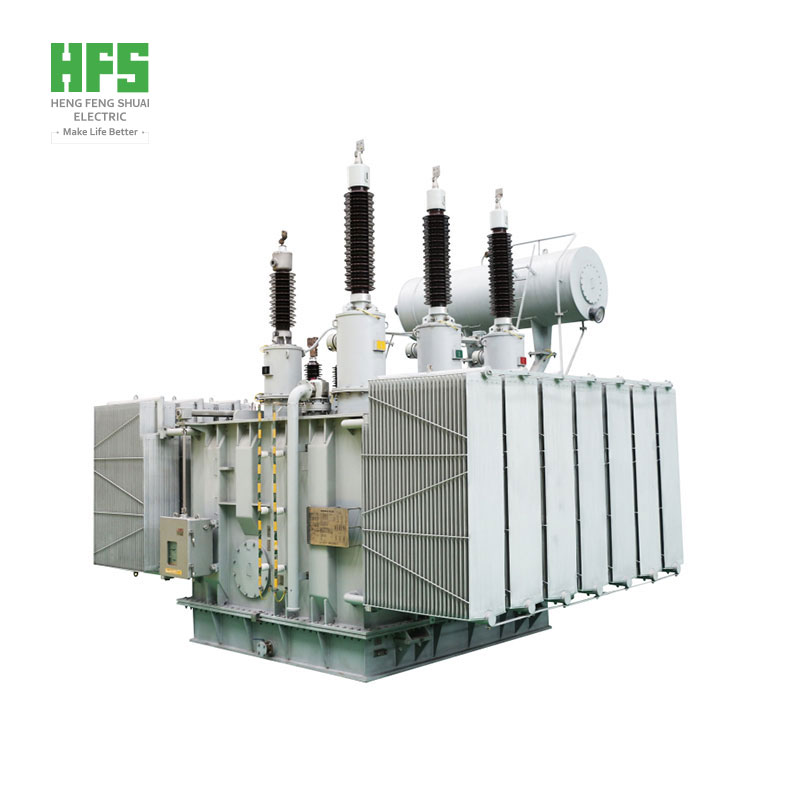
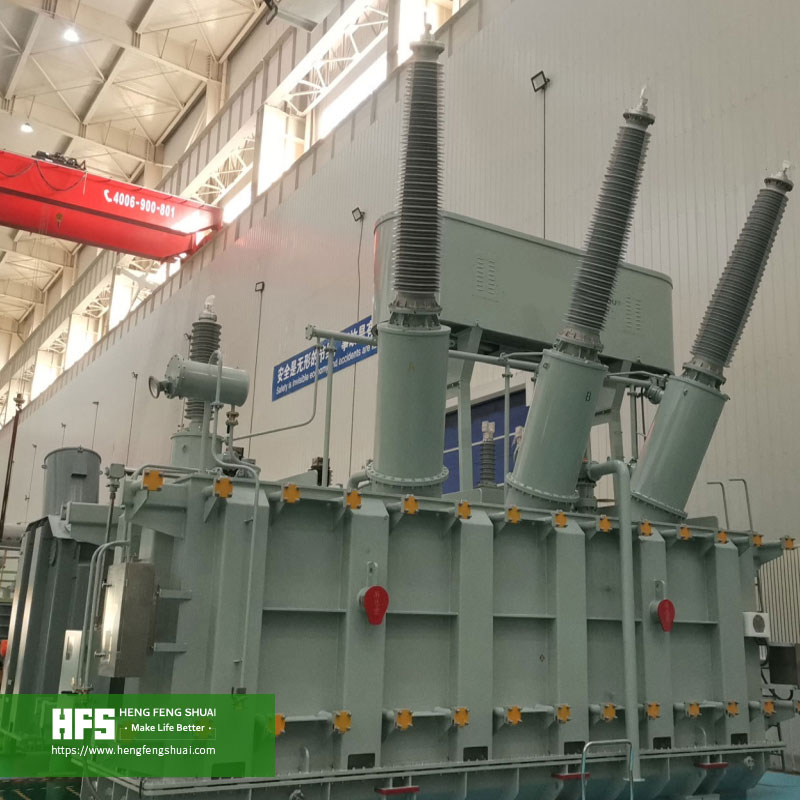
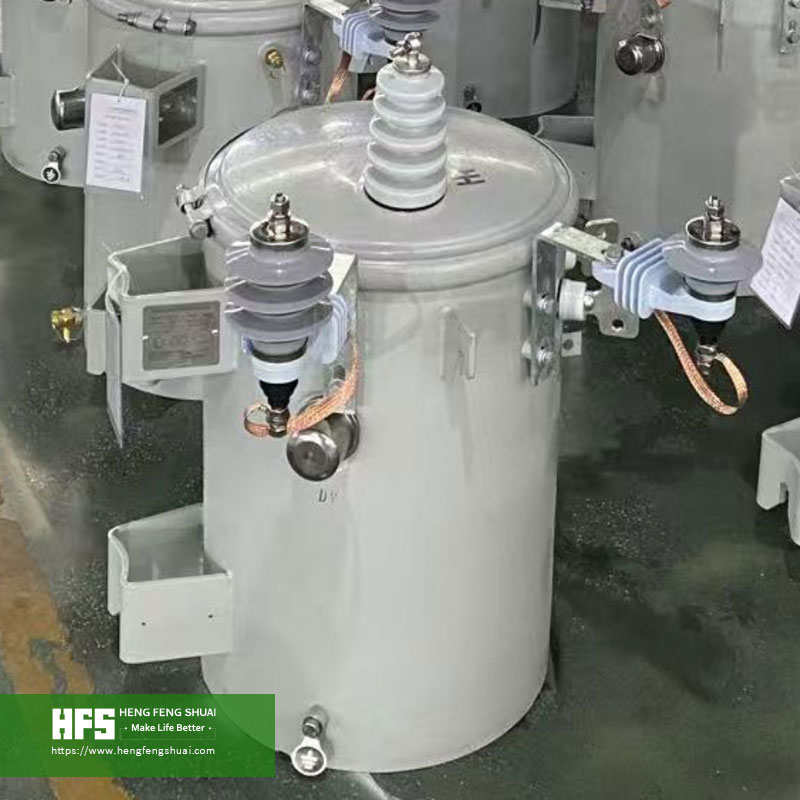
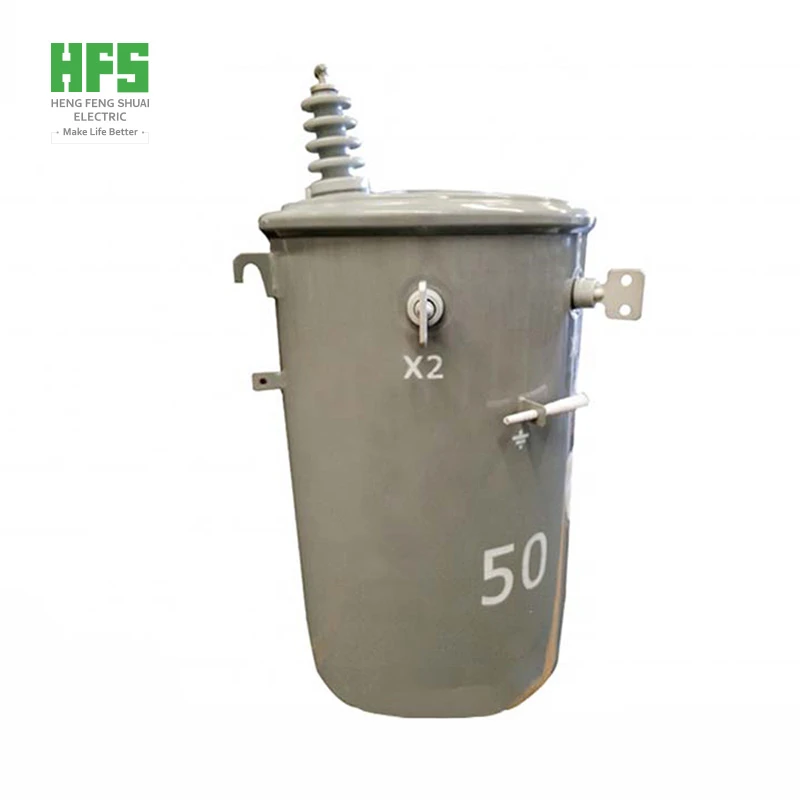
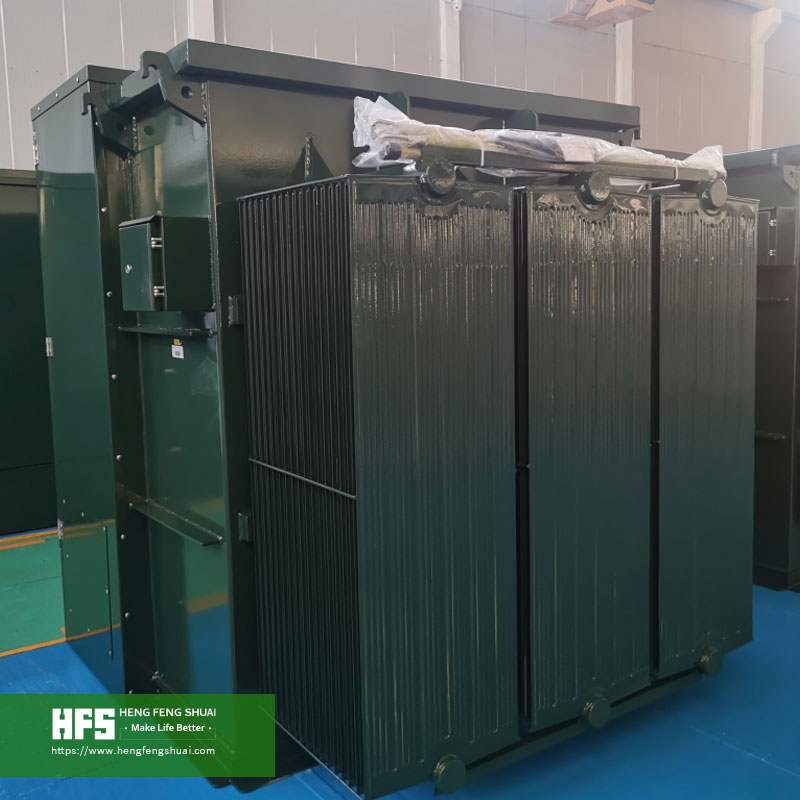
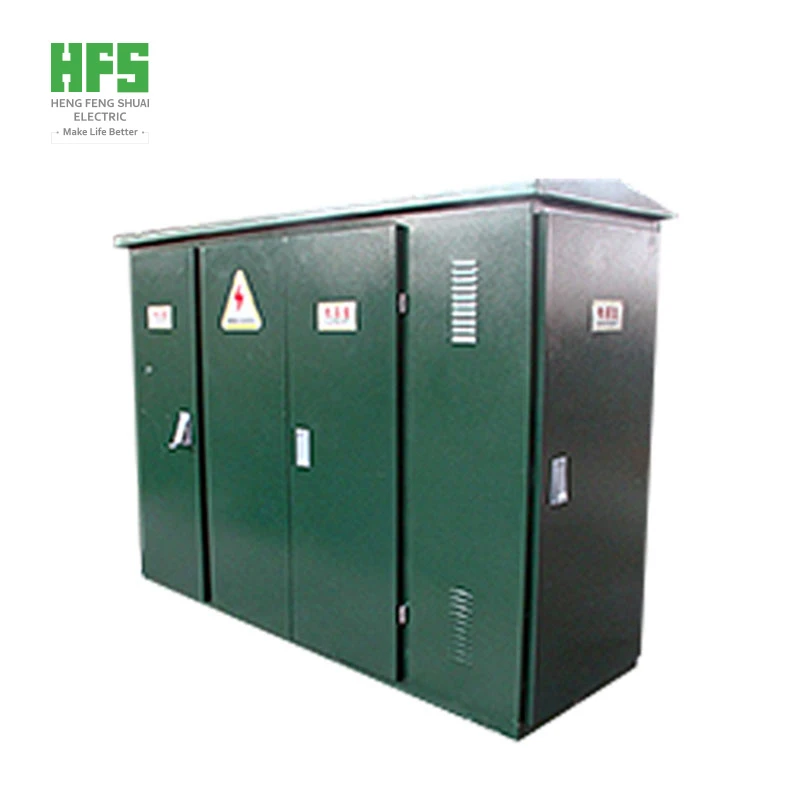
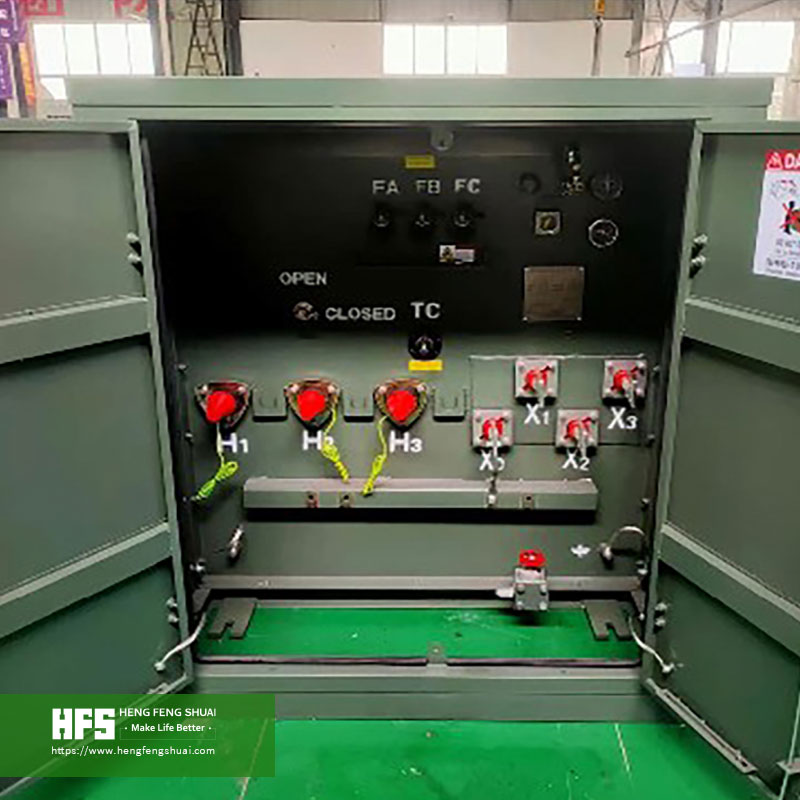
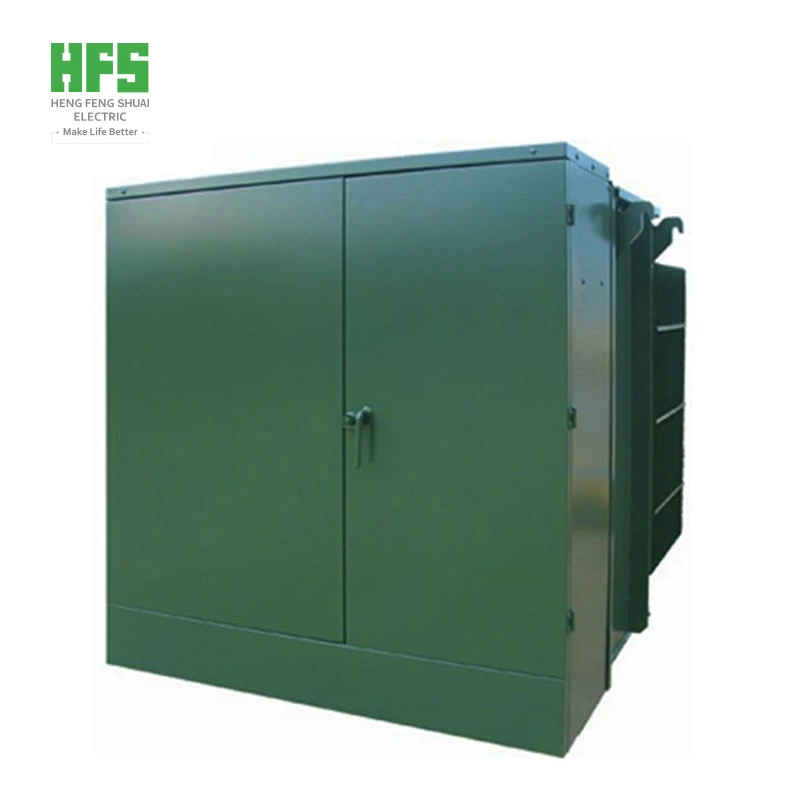
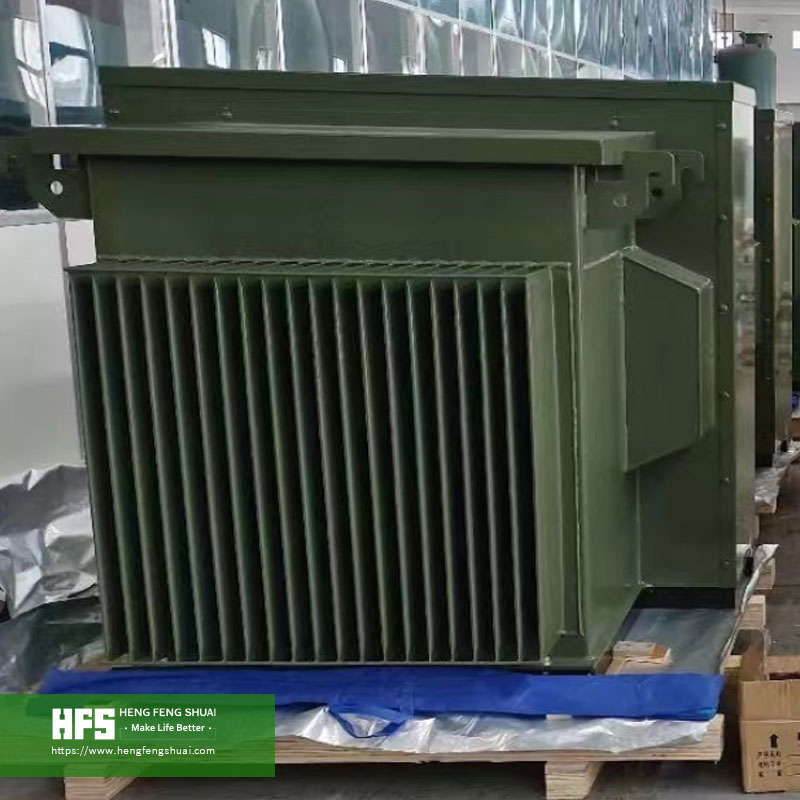
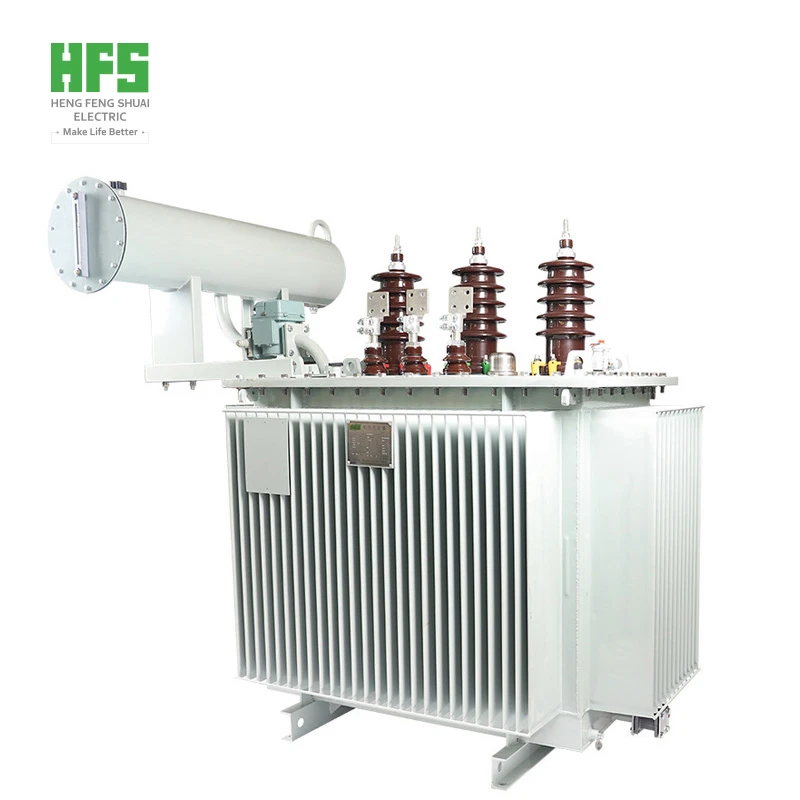
To meet the power distribution upgrade demand in the Clark Freeport Zone of the Philippines, the 2000kVA pad-mounted transformer with 34.5kV high-voltage input and 2.4kV low-voltage output has become the core power distribution equipment. Leveraging its R&D and manufacturing experience in power transmission and distribution equipment since its establishment in 1990, Hengfengshuai Electric provides an integrated one-stop solution covering design, production, testing and delivery for the Philippine market in compliance with international certification standards such as ISO, CE, CSA and UL, supporting the stable operation of the local power system.
1 Project Overview and Technical Specifications
This solution customizes 2000kVA pad-mounted transformers for regional power distribution scenarios in the Philippines. The equipment integrates transformers, switchgears, fuses, tap changers, low-voltage distribution devices and auxiliary equipment, adapting to the local complex climate and power consumption environment. It meets international implementation standards including ANSI C57, DOE, CSA, IEEE and IEC60067, and can be widely used in industrial parks, urban residential areas, commercial centers, high-rise buildings and other places.
Table: Main Technical Parameters of Pad-Mounted Transformers
Parameter Name Technical Index RemarksModel ZGS Series Pad-Mounted Transformer sIntegrated combined design
Rated Capacity 2000kVA Continuous rated capacity
Voltage Combination 34.5kV/2.4kV High voltage: 34.5kV, low voltage: 2.4kV
Rated AC Frequency 60Hz Adapted to the Philippine power grid frequency
Maximum Operating Voltage 38.5kV (±2×2.5%) Reserved voltage redundancy
Connection Group Adapted to ANSI standard connection modeEnsures low-voltage distribution stability
Core Certifications ISO, CE, CSA, UL Compliant with multiple international certifications
Applicable Environment Complex climates such as high temperature and high humidity Adapted to the local environment of the Philippines
2 Design and Development Phase
2.1 Electromagnetic and Adaptation Scheme Design
The design team carries out electromagnetic calculation and adaptive design based on the Philippine power grid standards and users' actual power load: calculates transformer loss, temperature rise and short-circuit impedance through professional simulation software to determine the parameters of core components such as iron cores and windings; for the 2000kVA capacity, high-permeability oriented silicon steel sheets are selected to reduce no-load loss, and the winding method is optimized to meet the 34.5kV high-voltage insulation requirements, ensuring the operating efficiency and safety of the equipment under the local power grid conditions in the Philippines.
2.2 Structural Drawing Design
After completing the electromagnetic scheme, the full set of construction drawings is designed (completed by a 3-person technical team in about 12 days). The core design contents include:
Iron core and winding drawings: specify the lamination method of iron cores, turn insulation thickness of windings and oil duct distribution, adapted to 60Hz operation;
Insulation and accessory drawings: design insulation structures such as corner rings and electrostatic plates, select accessories including fuses, tap changers and low-voltage circuit breakers to meet US DOE2016 energy efficiency specifications;
Oil tank and protection drawings: analyze oil tank strength via ANSYS finite element analysis, adopt anti-corrosion coating design to adapt to the high-humidity environment in the Philippines, and reserve heat dissipation and rainproof structures for outdoor installation.
2.3 Design Review
An internal review is organized by technical, process and quality teams, focusing on electromagnetic performance, structural strength, process feasibility and local compliance in the Philippines. The design scheme is verified to meet technical agreements, certification requirements and manufacturability before entering the production phase.
3 Production and Manufacturing Phase
3.1 Material Procurement and Inspection
In strict accordance with Hengfengshuai Electric's SQA quality inspection system, full-item re-inspection is conducted on core materials:
Silicon steel sheets: high-permeability oriented silicon steel is selected, and magnetic properties and thickness accuracy are tested;
Wires and insulation materials: T1 oxygen-free copper flat wires are adopted; insulation cardboard, cable paper and other materials are tested for water content and electrical strength to ensure insulation reliability;
Transformer oil and protective materials: temperature-resistant transformer oil adapted to the Philippine climate; anti-corrosion coatings, sealants and other materials pass salt spray tests to guarantee long-term outdoor operation.
3.2 Core Component Manufacturing
Iron core manufacturing: silicon steel sheets are precisely cut, deburred and coated with insulation layers, then laminated by six-step lapping to reduce magnetic resistance and no-load loss; no-load loss and current testing are completed after lamination;
Coil manufacturing: windings are wound in a constant-temperature and constant-humidity clean workshop; high-voltage windings adopt a multi-layer insulation structure, and low-voltage windings ensure uniform turns; DC resistance and turn number are tested one by one after winding;
Oil tank manufacturing: kerosene leakage test is carried out after steel plate cutting and welding; sandblasting and anti-corrosion spraying are performed, with coating thickness and adhesion meeting standards to satisfy outdoor C4-level anti-corrosion requirements.
3.3 Assembly and Drying
Body assembly: coils, insulation parts and iron cores are accurately assembled; leads are connected by silver-copper welding, and accessories such as tap changers and fuses are installed in accordance with specifications, with cleanliness controlled throughout the process;
Drying treatment: three vacuum drying processes (total drying time of 60 hours) are carried out to remove moisture from insulation materials, ensuring insulation resistance and electrical performance and adapting to operational stability in the high-humidity environment of the Philippines.
3.4 Final Assembly
The dried body is lifted into the anti-corrosion oil tank, and accessories such as bushings, radiators and oil conservators are installed, connecting the low-voltage distribution circuit and monitoring components. After final assembly, vacuum is pumped to ≤133Pa and maintained for 24 hours, followed by vacuum oil filling to ensure no bubbles or leakage inside the equipment.
4 Test and Verification Phase - FAT
4.1 Routine Tests
A full set of routine tests is completed for each pad-mounted transformer before delivery. Core items include:
Electrical performance testing: detection of winding DC resistance, voltage ratio and connection group label to ensure accurate transformation ratio and polarity;
Insulation and oil quality testing: measurement of insulation resistance and dielectric loss, analysis of breakdown voltage, moisture content and chromatography of transformer oil;
Operating performance testing: no-load/load loss and temperature rise tests to verify operating efficiency at 60Hz;
Protection function testing: tap changer operation test and fuse matching test to ensure power distribution safety.
4.2 Type and Special Tests
Special type tests are carried out for the Philippine market demand:
Lightning impulse test: verifies the equipment's ability to withstand lightning overvoltage in the Philippines;
Partial discharge measurement: discharge volume ≤100pC to ensure insulation safety;
Sound level measurement: noise controlled ≤60dB (A) to meet environmental requirements of residential and commercial areas;
Environmental adaptation test: operational stability test under high temperature and high humidity to verify the equipment's reliability in the local climate of the Philippines.
All test data are sorted and filed to form a complete Factory Acceptance Test (FAT) report, which is delivered to users with the product.
5 Packaging and Transportation Phase
5.1 Disassembly and Protection
After passing the tests, targeted protection is provided to adapt to island transportation and outdoor installation in the Philippines:
Disassemble bushings, radiators, low-voltage distribution modules and other accessories for classified packaging;
Install sealing cover plates on oil tank body flange interfaces, and fill with dry nitrogen (pressure 0.01-0.03MPa) to protect internal insulation;
Add shock-proof cushions to key components to avoid mechanical damage during transportation.
5.2 Packaging
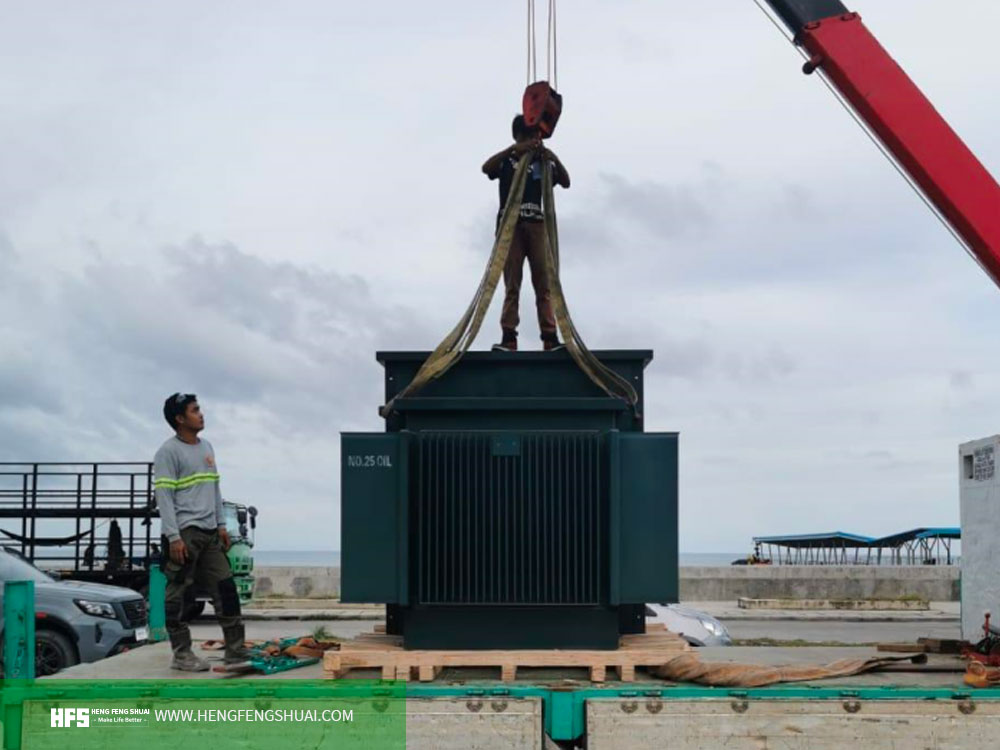
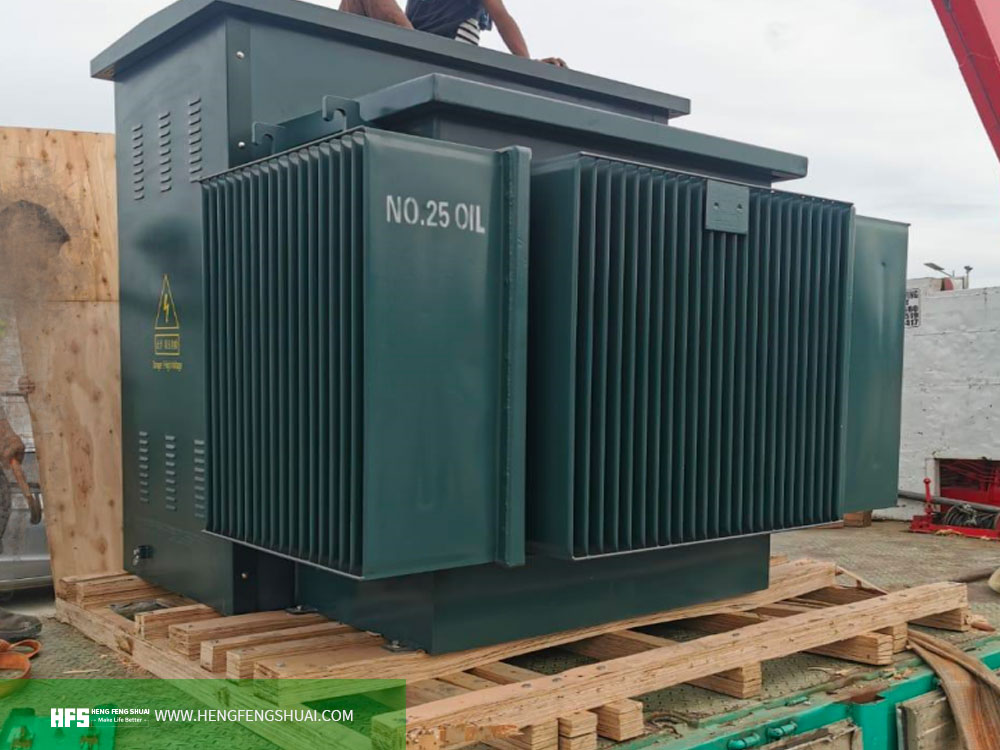
The main body is packaged with wooden brackets and waterproof and rainproof cloth; accessories are packed in wooden packaging boxes, marked with center of gravity, lifting points, no inversion and local transportation signs in the Philippines. Documents in the box include a full set of technical materials such as factory certificate, FAT test report, installation and operation manual, and packing list.
5.3 Transportation
Combined with the logistics characteristics of the Philippines, multi-axis semi-trailers are adopted for transportation. Transportation permits are handled in advance, cross-sea and land routes are planned to avoid bridge weight-limited sections. A three-dimensional impact recorder is installed throughout transportation to monitor vibration and impact data in real time, ensuring equipment transportation safety.
6 On-Site Delivery and Installation
6.1 On-Site Handover
After the equipment arrives at the project site in the Philippines, joint opening acceptance is conducted with users:
Check for rust, bumps and leakage on the appearance, and verify the quantity of accessories against the packing list;
Test nitrogen pressure to judge the sealing status during transportation, read impact recorder data to confirm no non-standard damage during transportation;
Verify product certification certificates and test reports to ensure compliance with US DOE2016 energy efficiency specifications and local power grid standards in the Philippines.
6.2 On-Site Installation
In accordance with local installation specifications in the Philippines, the core processes are as follows:
Placement: accurately position the transformer with hydraulic equipment to ensure levelness and installation height;
Accessory installation: install radiators, bushings and low-voltage distribution modules according to drawings, connect cables and control circuits;
Vacuum oil filling: pump vacuum to the specified value and then inject transformer oil adapted to the Philippine climate, strictly controlling oil temperature and speed during oil filling;
Standing and degassing: stand for 48 hours after oil filling, discharge gas in the gas relay multiple times to remove internal bubbles.
6.3 On-Site Handover Test
After installation, handover tests are carried out in accordance with Philippine power grid standards and China's DL/T 5161 series specifications. Core items include:
Re-test of insulation and oil quality: insulation resistance, dielectric loss and simplified analysis of transformer oil;
Electrical performance review: detection of winding DC resistance, voltage ratio and connection group label;
Protection and operation testing: tap changer operation test, cooling system switching test, gas protection verification;
Withstand voltage and deformation testing: AC withstand voltage test, winding deformation frequency response detection, comparing with factory data to verify no damage during transportation and installation.
6.4 Power-On and Commissioning
After passing the handover test, five no-load impulse closing tests are conducted to check the excitation inrush current and protection operation. After 24 hours of no-load operation without abnormality, the equipment is officially put into operation with load. Technical personnel are arranged on-site to provide commissioning guidance.
7 Whole-Process Quality Control
7.1 Key Quality Control Nodes
Design phase: compliance review and technical scheme audit, 100% passing local standard certification in the Philippines;
Production phase: material re-inspection, iron core/coil process inspection, cleanliness control of body assembly;
Factory phase: full-item FAT test acceptance, non-conforming products are strictly prohibited from delivery;
Transportation phase: full-process monitoring by three-dimensional impact recorder, transportation data filed and traceable;
On-site phase: comparison of handover test data with factory data to ensure no attenuation of equipment performance.
7.2 Document Delivery
Complete and compliant technical documents are delivered to Philippine users, including product factory certificate, FAT test report, installation, operation and maintenance manual, instruction manuals for accessories such as tap changers and bushings, assembly drawings (electronic version), SAT on-site handover test report, as well as technical guidance documents in local languages of the Philippines.
8 Summary
The full-process solution provided by Hengfengshuai Electric for 2000kVA-34.5kV-2.4kV pad-mounted transformers in the Philippines is not only customized delivery of equipment, but also in-depth adaptation based on local power grid standards, climate environment and power consumption demand in the Philippines. Relying on its power transmission and distribution equipment manufacturing experience since 1990, R&D strength investing 6% of revenue, and production capacity supported by 6 production bases, we have provided high-quality solutions for more than 50 countries around the world. Contact Hengfengshuai Electric (hfs@hengfengshuai.com) now to obtain customized services for pad-mounted transformers adapted to the Philippines, supporting the efficient and stable operation of the local power system.